


Key Takeaways
- One leak does not automatically mean every pipe in the house needs replacement.
- Recurring leaks, rusty water, reduced pressure, and corrosion can point to broader pipe failure.
- Pipe material, water conditions, repair history, and access all affect the right solution.
- A detailed inspection helps homeowners compare repair, partial replacement, and full repipe.
Older homes can have dependable plumbing for many years, but pipes do not last forever. If you are seeing repeated warning signs, speaking with whole home repiping plumbers in Salt Lake City UT can help you determine whether the problem is isolated or part of a system-wide issue.
A repipe is a significant project, so it should be based on evidence rather than a home’s age alone. Some older systems need only a carefully targeted repair, while others have internal corrosion or weakened connections that make repeated patchwork repairs increasingly costly and disruptive.
Why Older Plumbing Needs a Closer Look
Water supply pipes are exposed to pressure, temperature changes, mineral deposits, and normal wear every day. Hard water, highly acidic water, frequent pressure swings, freezing conditions, and poor-quality past repairs can all shorten a system’s useful life. Problems often begin inside pipe walls or behind finished surfaces, where homeowners cannot see them until a leak, stain, or loss of water flow appears.
That does not mean every pipe in an older home is failing. A professional should consider the material, condition of accessible lines, location of past repairs, and whether symptoms occur in one room or throughout the house.
Seven Signs That Point to Larger Pipe Problems
- Leaks keep returning. A single damaged fitting may be repairable, but leaks appearing in different rooms or on separate lines can indicate widespread deterioration.
- Water looks rusty or yellow. Persistent discoloration may come from corroded supply lines, sediment, or a water-source issue that needs testing.
- Water pressure keeps dropping. Internal rust and mineral buildup can gradually restrict water flow at multiple fixtures.
- Several fixtures act up together. Weak showers, slow-filling appliances, and poor sink flow throughout the home deserve a broader plumbing evaluation.
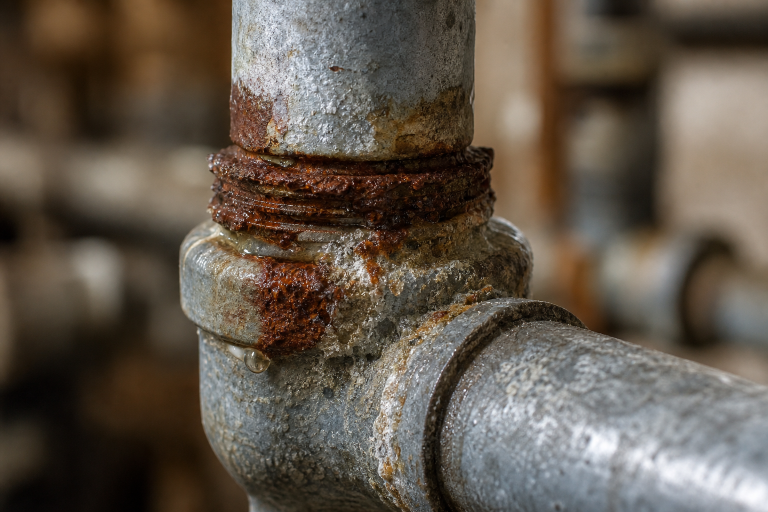
- Visible corrosion appears. Rust spots, flaking metal, green deposits on copper, damp joints, and crusty scale are all warning signs.
- Walls or ceilings show water damage. Stains, peeling paint, bubbling drywall, warped flooring, or musty odors may signal a concealed leak.
- The home has outdated pipe materials. Identifying the material is important before deciding between repairs and replacement.
Repair or Repipe? A Practical Comparison
- Choose a repair when: the damage is limited to one accessible section, the surrounding pipe is sound, and the issue has a clear cause.
- Consider a partial replacement when one branch line or bathroom area has repeated trouble, but the rest of the system is in good condition.
- Consider a full repipe when: multiple leaks occur in separate locations, corrosion is widespread, low pressure affects much of the home, or repair bills continue to accumulate.
- Look beyond the immediate leak: an inexpensive patch may not be the lowest-cost option if nearby pipes are near failure.
How Pipe Materials Affect the Decision
Galvanized steel can rust internally, narrowing the pipe and weakening its walls. Polybutylene, often used in gray plastic piping, should be evaluated promptly because aging connections and material performance can pose failure risks. Copper can last decades, although certain water conditions may contribute to pinhole leaks. PEX is flexible and corrosion-resistant, while CPVC may be suitable in some homes depending on local code requirements, temperatures, and installation conditions.
Water Quality Questions Homeowners Should Ask
Unusual taste, odor, or color should not be blamed on household pipes without investigation. Determine whether the issue occurs at one tap or throughout the home; ask the water provider about testing and service-line records; and use testing to distinguish a plumbing concern from a municipal supply concern. Older pipes, fixtures, fittings, and solder can contribute to lead in drinking water, which cannot be reliably identified by taste, smell, or appearance.
- Use cold water for drinking and cooking when lead contamination is a concern.
- Do not assume boiling water removes metals such as lead.
- Remember that a filter may reduce certain contaminants, but it does not repair corroded or leaking pipes.
What a Professional Plumbing Inspection Should Include
A useful inspection should review the home’s age, plumbing history, and prior repairs. It should identify visible pipe materials, check pressure at multiple fixtures, inspect accessible lines for corrosion and moisture, and assess whether the problem involves supply or drain pipes or the service line. When warning signs suggest concealed leaks, the plumber may recommend additional leak detection or targeted access before proposing a full replacement.
Questions to Ask Before Approving a Repipe
- Which pipe sections are failing, and why?
- Would a targeted repair or partial replacement be reasonable?
- Which replacement material fits the home and local water conditions?
- How will access affect walls, ceilings, cabinets, flooring, and landscaping?
- Who handles permits, inspections, pressure testing, cleanup, and surface repairs?
- What parts and labor warranties are included in writing?
How to Plan the Work With Less Disruption
Clear access around sinks, toilets, utility rooms, crawl spaces, and likely wall openings before work begins. Protect furniture and belongings, plan for temporary water shutoffs, and ask how drywall or other access openings will be restored. If a kitchen or bathroom remodel is already planned, replacing aging supply lines while walls are open can reduce future demolition and inconvenience.
Cost Factors to Review
Repiping costs vary widely depending on home size, fixture count, pipe material, labor rates, and access to the home’s slabs, attics, crawl spaces, or finished walls. Permits, inspections, drywall repair, painting, and whether the service line is included can also change the final price. Compare detailed written estimates instead of relying on a broad online average. Homeowners can also review public notices about lead action-level exceedances when local drinking-water concerns are part of the decision.
Common Questions About Repiping Older Homes
Does one leak mean the whole house needs new pipes?
No. One isolated failure may only need repair. Repeated failures, internal corrosion, and leaks in several areas justify a more complete assessment.
Can low water pressure come from something other than old pipes?
Yes. Clogged aerators, partly closed shutoff valves, failing pressure regulators, municipal supply changes, and fixture problems can all reduce flow.
Can homeowners stay in the house during the work?
Many households can remain at home, but they should expect noise, dust, limited access to rooms, and periods without running water.
A Simple Decision Checklist
- Record leaks and plumbing repairs from the past two years.
- Check whether pressure problems affect one fixture or the entire home.
- Inspect visible pipes for rust, scale, cracks, and dampness.
- Identify the existing pipe material where possible.
- Test questionable water instead of relying on appearance alone.
- Compare repair, partial replacement, and full repipe options in writing.
Conclusion
A repipe should address a documented plumbing problem, not simply be a response to a home’s age. When leaks recur, pressure drops, water discoloration persists, or corrosion is widespread, a full replacement may offer more reliable long-term protection than another temporary repair.